


For coming up on a year, frontline industry workers have been unable to work from home like many of the customers they serve, instead facing higher risk of exposure to the coronavirus in showing up to manage waste and recycling.
While there’s not a definitive count available of the number of industry workers who have personally faced illness, it’s safe to say “thousands” have contracted the virus and at least “dozens” have sadly lost their lives to it, according to Solid Waste Association of North America (SWANA) CEO David Biderman.
Industry groups hope the arrival of vaccines could present a safer light at the end of the tunnel for these and other essential workers.
But before many of those workers can receive a shot, there’s more work to be done in safely disposing of materials from their manufacture and rollout.
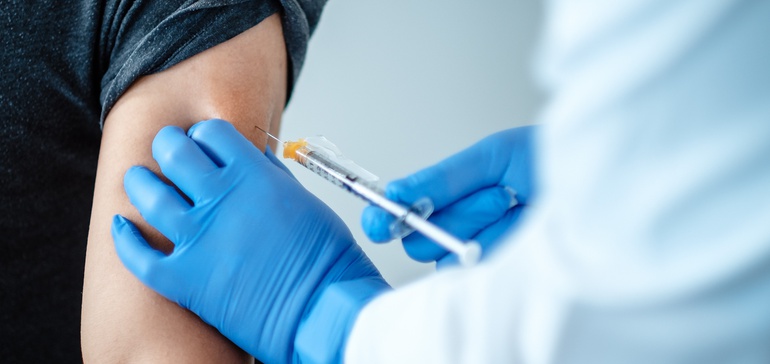
Since the first Pfizer-BioNTech vaccine dose was first administered last month, and with the Moderna vaccine entering circulation shortly thereafter, the Centers for Disease Control and Prevention (CDC) reported early Jan. 6 that more than 5.3 million people in the U.S. have received an initial dose.
Although the U.S. COVID-19 vaccine rollout plan is still in its earliest days, those responsible for managing cleanup do not expect the newfound medical waste volumes to overwhelm existing infrastructure. That’s in part because medical waste volumes were down as the pandemic prompted a decline, with non-urgent procedures halted and rescheduled, and less travel, for example, led to fewer traumatic accidents.
The standards, policies and procedures governing vaccine waste — which in the case of COVID-19 does not contain any potentially dangerous viral material and is accordingly considered non-hazardous regulated medical waste — are well-known, said Alston & Bird partner Elise Paeffgen. But there are some unique considerations to be aware of.
While syringes and empty vials can simply be put in a sharps container, Pfizer, for example, requires that the box that held the vial trays and its related packing materials be returned to the manufacturer. According to the pharma company, that’s to help it “fulfill its commitment to reusable resources.” Ensuring protocols are followed may fall on both the healthcare provider and the waste management company, Paeffgen said.
Companies like Clean Harbors believe their existing infrastructure is sufficient to handle the new volume of waste from the coronavirus vaccine rollout, given that it will be spread out over months. Medical waste company Stericycle was not available to comment.
Still, Clean Harbors Senior Vice President of Technical Services John Kelsey said his company is taking some extra steps to scale up, including ensuring customers have plenty of sharps containers and in some cases planning to add stops to routes, as vaccine distribution widens from already accounted-for healthcare facilities to sites like schools or sporting events.
It’s hard to predict what the trajectory of medical waste volumes will look like in 2021, said Brad Wright, healthcare lead at Covanta Environmental Solutions, which handles destruction of any off-specification vaccines or rare instances when they fall out of the supply chain, in addition to handling waste from administration of the vaccine.
“How much of that reduction is going to be offset by mass vaccination — it’s truly an unknown,” Wright said. But once people eventually get back to normal routines, things should even out.
As for when Covanta employees may be vaccinated, Wright noted the company will continue to appropriately manage risk and exposure for workers handling materials as it has throughout the pandemic, and support vaccination when it’s “our turn.”
Getting their shot
A key CDC advisory committee in December recommended that Phase 1b of the vaccine rollout — the group directly following healthcare personnel and residents of long-term care facilities — should in part include frontline essential workers.
Although industry groups pushed for that recommendation to explicitly list frontline waste and recycling workers, it did not. The CDC instead highlighted first responders, corrections officers, U.S. Postal Service employees, teachers, and workers in public transit, grocery stores, food and agriculture, grocery stores and child care. Other essential workers fall into Phase 1c.
“We’re not the only group seeking to be prioritized for vaccines,” SWANA’s Biderman said. “Everybody has a good story to tell … that makes it challenging.”
Of course, it’s a sizable group to vaccinate. According to National Waste & Recycling Association data, the solid waste industry alone directly employed about 450,000 people as of mid-2019. NWRA issued a statement expressing disappointment following CDC’s ultimate guidance late last month.
“People aren’t always thinking about waste companies,” said NWRA Vice President of Safety and Standards Kirk Sander. “The issue is, our companies do such a good job that people don’t think about how their waste is removed… because it has happened … until it doesn’t, then it becomes a big issue.”
But the CDC recommendations are non-binding, meaning it’s ultimately up to states to decide the appropriate order of distribution. Trade groups have since turned their attention to urging state officials to include waste workers among the earlier-priority essential workers.
Both SWANA and the NWRA say while they’ve received responses from some states, communication is ongoing. Michigan, for instance, says it plans to classify medical waste handlers among Phase 1a given exposure to healthcare settings. In places where that protocol for medical waste handlers may not be the case, Sander suggested that a healthcare facility might elect to extend a dose to waste handlers when the facility has plenty of vaccine doses available for staff.
SWANA’s Biderman said a coordinated campaign is in the works among industry groups and companies to encourage workers to receive the vaccine when it becomes available.
Recent Comments