


Shipping & Logistics
Why exports cargo through SGR remain low, two years later
Wednesday, March 18, 2020 0:01
By GITONGA MARETE
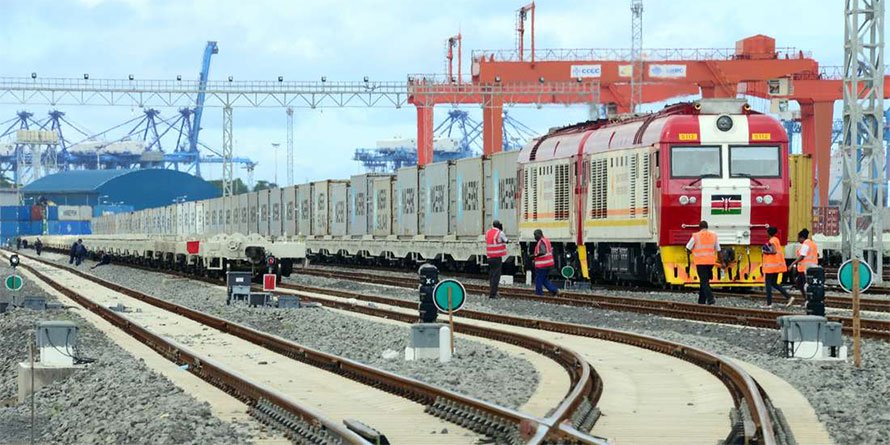
Two years after the launch of the Standard Gauge Railway (SGR) freight services, securing of return export cargo has been an uphill task, with stakeholders in the logistics sector calling for modalities aimed at attracting traders to use the facility.
Currently, the SGR transports mainly Del Monte Kenya Limited containers, which are about 70, said Nairobi Inland Container Depot (ICD) manager Peter Masinde.
There were also ongoing talks with coffee exporters from Uganda on how they could use the SGR to transport their commodity to Mombasa port, Mr Masinde said.
“We are in talks with Uganda coffee exporters with the view to putting in place modalities on railing their commodity, estimated to be about 30 containers daily, and we expect to conclude this arrangement in the next few weeks,” said Mr Masinde.
There were also negotiations with tea exporters who were expected to transfer their direct sales to the ICD for onward transportation to Mombasa for loading onto vessels, he said.
KRC, Mr Masinde said, was exploring a possibility of providing warehouse services at the Nairobi ICD where exporters would blend their tea in readiness for onward transportation to Mombasa.
However, players in the logistics sector say Kenya Railways was “resistant” to changes they had proposed, which had seen exporters give up on the mode of transport, leaving KR’s plans merely on paper.
According to the Shippers Council of Eastern Africa (SCEA) executive officer Gilbert Langat, there is “reluctance and lack of interest” in transporting exports via SGR, adding that last year they held several meetings with the Kenya Railways with a view to striking a deal, but talks were not concluded.
“There was little progress and stakeholders did not see commitment in the engagement so we gave up,” he said.
East Africa Tea Trade Association (EATTA) managing director Edward Mudibo said they had started discussions on transporting tea exports last year but nothing came out of the deliberations. EATTA runs the Mombasa auction which serves the East Africa Community (EAC) countries.
While EATTA said they are willing to change some rules to suit transport of tea via the SGR, they add that there have not been “serious commitment” on the part of the corporation to strike a deal especially in regard to freight rates.
Currently, the rules state that tea presented for auction must be warehoused in Mombasa so that after the importer buys it, it’s loaded onto the vessel.
This situation presents a costly logistics chain where if it would be railed from Nairobi, the consignment would have to be transported to warehouses in Mombasa for blending and back again to the port, thus increasing the cost of transport.
“The change of procedures would allow exporters to blend tea in Nairobi, keep it in a warehouse and bring samples to Mombasa for auction. The consignment would then be railed to the port for loading into the vessel,” Mr Mudibo told Shipping & Logistics in a telephone interview.
However, of critical concern to tea exporters is the current freight rates that they say are uncompetitive with KRC maintaining the rates will not be adjusted downwards.
Mr Mudibo said they expected that with the cost of imports at Sh80,000 per container, they would be charged half of the amount since there was little cargo on the return trip to Mombasa.
“We are still waiting for the corporation to give us a feedback on whether they can reduce the rates. SGR is the best form of transport and if rates are competitive tea exports would definitely be railed to Mombasa,” he added.
Although importers praised the SGR as a safe mode of transport compared to ferrying goods by road, the cost is still prohibitive, forcing small traders to continue using trucks. SGR is currently moving between eight and 10 trains every day.
According to SCEA, although the SGR had managed to provide a secure mode of transport since currently there is minimal theft of goods, importers have a long way to go before realising the benefits of reduced costs.
Ideally, transporting goods by rail is cheaper than any other mode of transport in other parts of the world but the Kenyan case is different where transporting cargo by SGR from Mombasa to Nairobi is more expensive than moving it by road.
In April last year, a joint technical committee appointed to look into ways of reducing cost of transporting cargo from Mombasa to the ICD noted that ferrying a 20-foot container to Nairobi costs $1,420 (Sh142,000) while a 40-foot container costs $2130 (Sh213,000), which is double the cost of transporting the goods by road.
“The delays, storage charges and intervention by too many agencies have eroded the gains of a cheaper mode of transport. The cost by SGR is higher by at least 35 percent which accrues from handling charges, cargo dwell time at the port and too many players in the logistics chain,” said Mr Langat.
For six months now, small traders have been transporting their goods from Mombasa using trucks due to the high cost, said Samuel Karanja, Importers and Small Traders Association (ISTA) executive officer.
He said the cost of transporting a container from Mombasa to the ICD and to their final destination is higher than that of the road transport.
“We had asked Kenya Railways to consider at least lowering the cost to Sh50,000 but they have not conceded,” said Mr Karanja.
“The SGR is safer and we would prefer using it but it does not make business sense to transport raw materials using a more expensive mode of transport.”
The SGR cost is Sh80,000, the same cost as transporting by truck, which does not put into consideration the last mile transport cost that Mr Karanja said ranges between Sh15,000 and Sh20,000 depending on the destination.
“There are also handling costs at the ICD and if you consider the cost of one container it might be in the range of Sh100,000. If they could reduce the freight to at least Sh50,000 per container that would be reasonable,” he said.
“Small traders import more than 300,000 Teus of the 1.2 million that lands at the Mombasa port and transporting this cargo through the SGR would add volumes that Kenya Railways seeks to increase but we want better rates.”
Recent Comments