

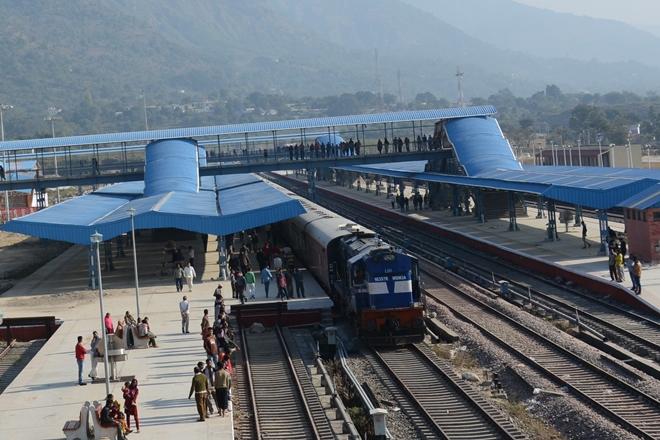

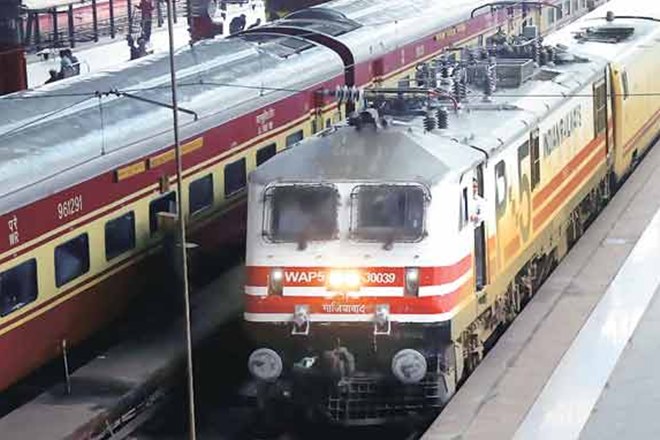
 During the initial period of railway construction and expansion, officer cadres were mainly manned by British engineers
With alarm bells ringing for the Railways, the government has signalled that it is prepared to grasp the nettle. It aims at integrating the Railways’ existing eight Group ‘A’ services into the Indian Railways Management Service (IRMS), and downsizing the Railway Board from nine members to five (including Chairman), re-designating them on functional basis, instead of departments as done so far.
These measures, no doubt necessary, aren’t enough. The need for the Railways today is to virtually re-invent itself. As rapidly evolving business ethos and technological developments generate a new momentum, the Railways must perforce be agile and alert, widening its vision from being just in the rail transport business to becoming an integrated, inter-modal logistics operator. To become forward-looking, technologically-dynamic, customer-friendly, and cost-effective, it should enlist, on a need basis, external agencies/institutes, specialists and professionals, for example, for R&D and IT, shed off-line activities, and shed its accumulated layers. Like its decision to corporatise its production units (much belated), it should do this for its construction wings next.
Any change triggers varying reactions. Not unexpectedly, many apprehensions about the IRMS have been voiced. The stated rationale for the restructuring—“departmentalism” decried as “silos sapping the Railways’ energy and vitality’—has been questioned by some veterans, but it is difficult to believe that the Railways Board has been a well-knit, cohesive corporate body. Parochial considerations often overcome organisational well-being. Some departments, particularly, vie to inflate the numbers to secure senior positions. Departments engaged in executing projects have kept widening their bases by subterfuges such as “work charged” posts which, as the Bibek Debroy Committee found, are continued for years after the projects are completed, with the connivance of Finance, which too ekes out its share from the pie.
In 1947, the Railway Board had a Chief Commissioner (later called President; in 1951, re-designated Chairman), a Financial Commissioner, and three Members (Transportation, Staff, Engineering). Well after a Member Mechanical was added in 1954, another Member Electrical joined in 1987. Soon clamour set in for the remaining two cadres (Signalling and Stores) also to have their representation on the Board. Realising the impact of the spreading departmentalism virus in the system, in 2015, government initiated a halfway measure to merge two verticals of Electrical and Mechanical branches on ‘functional lines’, designating the Member Mechanical as Member Rolling Stock, and Member Electrical as Member Traction. But, strangely, it was only just some months ago that the Railway Board was expanded to make it a nine-member body, with two new members, one for Signalling, and the second for Stores—no doubt, exacerbating the departmentalism virus.
In the meanwhile, since the 1980s, time-tested precepts for selection of general managers and board members for the Railways have been altered, thereby eroding the system’s effectiveness. Like the army filling senior ‘command’ posts mostly from among those from the fighting ‘arms’, posts of zonal general managers were required to be manned only by officers exposed to rigours of action in the field. Board members were invariably from among general managers from zones (termed ‘Open Line’), not from the production units or projects. Instead of first devising a mechanism for selection of genuinely suitable officers with requisite experience, from different disciplines, training and exposing them to situations that trained them to competently shoulder divisional and zonal command posts, thoughtlessly, doors were thrown open for all; even those confined to ‘back-office’ desks for most of their career.
Some commentators have observed, “The Augean stables strategy of unifying cadres …may create more problems than it can solve”. Successful transition will depend on devising an enduring format for future recruitment, and , above all, fair and equitable readjustment of existing 8,400 Group ‘A’ officers to have their legitimate career progression ensured, consistent with optimal organisational interest.
Some critics of the new policy have ascribed prevalent “inequitable career progression across departments” to “inadequate recruitment planning for Group ‘A’ officers”, whereas a major cause is the age differential of recruits through Civil Services exam vis-à-vis those from engineering stream, and Special Class Apprentices joining as mechanical engineers.
There is little clarity on the methodology for recruitment for the unified IRMS. Functionally, there can be no escape from departments; both technical and non-technical specialisations are needed for a complex multi-disciplinary rail industry. Three streams for specialised railway requirements may well serve the purpose: (i) non-technical segment to cater for operation and business development, HR, and finance; (ii) civil and signal engineers for infrastructure; and (iii) electrical and mechanical engineers for rolling stock or mobile assets. Stores or material management may well be made a part of Finance.
With a view to creating a cohesive and integrated ‘cadre’, the Railways may look at inducting all its IRMS Group ‘A’ managers from amongst technical/engineering graduates, who, during training, may be additionally exposed to transport economics and business management. The template that army provides for selection, training, and assignment of officers to different ‘arms’, analogous to the Railways disciplines, may be a good guide. For future recruitment, there may be no major hurdle to abide by the underlying spirit of IRMS.
The complex issue of equitably adjusting the existing officers necessitates an empathetic mechanism. Those unwilling to opt for merger with IRMS must be allowed to continue, seeking their prospects in their specialised cadres, while all others opting for merger be prepared for a fresh selection by UPSC, necessarily done on basis of genuine suitability, for general management posts. Age and seniority based on rank in UPSC test over 30 years back alone cannot be a fair measure of suitability.
During the initial period of railway construction and expansion, officer cadres were mainly manned by British engineers holding diplomas or degrees, or those from the Royal Engineers, while recruits for operational and commercial jobs, not drawn from among university men, remained disadvantaged for manning higher management posts. How can any organisation allow such glaring anomalies as encountered? For example, the cadre engaged in railways’ core business has just one of the 27 posts of general manager? Such lopsidedness in senior managerial posts is baffling: Transport operation and marketing (IRTS) has been given only 1.6% of the GM posts compared to 20% for Mechanical (IRSME), 10% for Electrical (IRSEE), and around 8% each for Signals (IRSSE), Civil (IRCE), and Stores (IRSS)!
The Railways’ top management posts must perforce be manned only by those who are exposed to the vagaries of the market and rigours of operations in the field. Those others who provide vital support for the Railways’ primary business would naturally be enabled to rise in their specialised domains. That is how the Tandon Committee on Organisational Structure & Management Ethos of Indian Railways (1994) advised for suitable selection of officers with “needed combination of managerial ability and knowledge” for senior general management positions, while others “would seek their advancement in the areas of their broad specialisations rising up to positions of …Director General”.
Thanks to periodical cadre restructuring, a large number of posts have been devalued, and additional tiers inserted, like those of AGM, ADRM, etc. It erodes the Railways’ effectiveness. The Bibek Debroy Committee found that “IR’s efficiency was better with 9 zones than with 16”. It would be prudent to holistically restructure the organisation, including to streamline the traditional four-tiered organisation into a three-tiered system, as Chinese Railways did in 2005, by abolishing its 44 sub-regional entities—equivalent of IR’s 68 Divisions. Concomitantly, large station complexes, major freight centres, maintenance depots and installations would need to be endowed with empowered local area managers.
The Railways needs to institutionalise the selection for general management pool. It may afford an opportunity to officers from all disciplines to be considered, say, on completion of 15 years of service, selection done only by an external agency, preferably by the UPSC. A rigorous selection process together with training will help an enduring management cadre to evolve, for appointment as empowered local area managers at large stations, workshops and depots, also in Planning, Vigilance, Public Relations, and, of course, following regular specialised courses, as Divisional and Zonal heads. No organisation or country can afford to get stuck in time, history or geography. Given right leadership, nation’s crown jewel, the Railways, will bounce back and deliver. Its management needs to embrace creative destruction, not just preserve the past.
Get live Stock Prices from BSE and NSE and latest NAV, portfolio of Mutual Funds, calculate your tax by Income Tax Calculator, know market’s Top Gainers, Top Losers & Best Equity Funds. Like us on Facebook and follow us on Twitter.
Recent Comments