


In her last weeks working the freight shift at the local J.C. Penney store, Alexandra Orozco took out her phone and hit record. The 22-year-old shot a video of the giant black-and-red ‘Everything Must go!” posters, and posted it on TikTok in October.
“Slowing losing my job,” she wrote below, days before the store in Delano, California shut for good, one of 156 J.C. Penneys across the United States to close since June of this year.
Since being laid off, she’s applied for a couple of roles — counselling kids, delivering flowers — but has yet to hear back.
“It’s so sad,” she explains over the phone. “And it’s hard to find jobs here.”
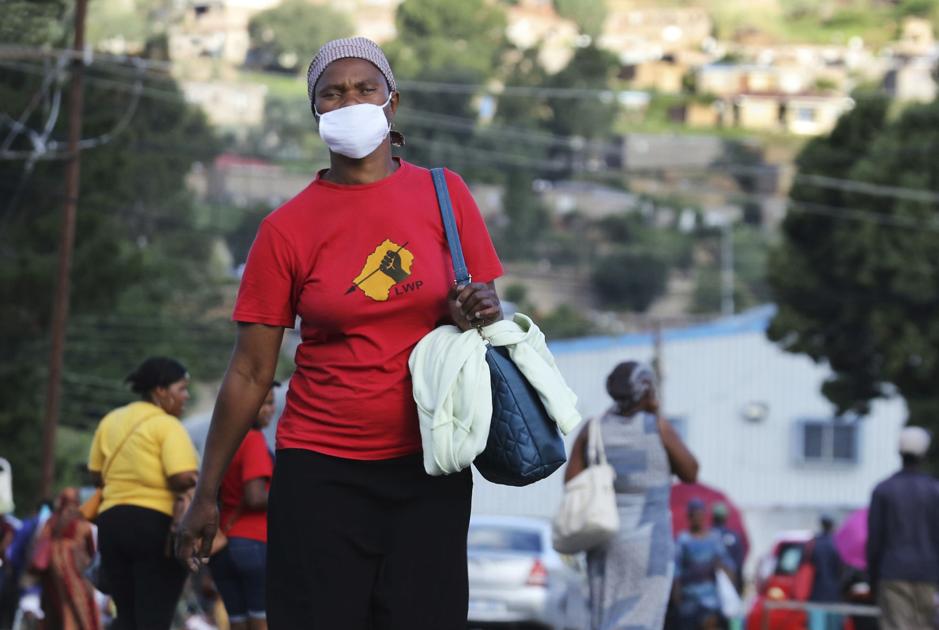
Halfway across the world, Matefo Litali experienced upheaval, too. A skilled sewer, the 53-year-old worked at Tzicc Clothing, apparel-maker for U.S-based giants J.C. Penney and Walmart, in Lesotho, a small mountainous country surrounded by South Africa.
She was employed for two months before nationwide lockdown measures forced all garment factories to temporarily close in March. After two days back at work, Tzicc confirmed her last day was May 7.
“I felt powerless,” Litall said. “The first thing that went through my mind was, ‘Why me?’”
Neither woman has met. Nor are they likely to: one lives in a remote agricultural town on the West Coast of America, the other 10,000 miles away in southern Africa. Now, both of their lives — and livelihoods — are linked by a global pandemic that has crushed one of the world’s supply chains and with it, economies, too.
COVID-19 lockdowns have obliterated a retail sector already struggling to survive before the coronavirus hit, which has in turn contributed to the collapse of the global garment trade and wreaked havoc for millions of workers, the vast majority women like Orozco and Litali.
Over the past two decades Lesotho’s garment industry, where 9 out of 10 workers are women, has boomed to become its largest employer, crafting clothes for Levis Strauss, Wrangler and Walmart. While Lesotho is a lesser-known garment powerhouse compared to China or Bangladesh, it’s another example of an economy heavily reliant on U.S. demand.
Outside of the African continent, America is the largest recipient of Lesotho’s exports — accounting for almost half — according to the most recently available World Trade Organization data from 2017.
In the U.S, meanwhile, clothing retailers have been hit particularly hard. The country is one of the world’s top importers of clothing, accounting for nearly a quarter of global retail spend. While J.C. Penney hasn’t been profitable since 2010, the 118-year-old chain filed for bankruptcy in May. Six months later, it was bought out but its workforce was slashed by over 10,000 during restructuring, a source familiar with the situation confirmed to The Fuller Project.”
J.Crew, Neiman Marcus and Brooks Brothers also filed for bankruptcy this year.
“And when a big U.S retailer takes a tumble,” says Neil Saunders, managing director of GlobalData Retail, “the effects are felt across the globe.”
In March, as U.S. retailers cancelled or failed to pay for existing orders worth billions of dollars, the effects quickly rippled down the supply chain.
At Tzicc Clothing, roughly one fifth of employees have lost their jobs since May, says Tšepang Makakole of Lesotho’s National Clothing and Textile Workers Union. “For women, it’s a disaster…The industry is facing a total collapse.”
Litali felt weak in the knees when she heard that she was suddenly unemployed. A widow for the last eight years, the seamstress single-handedly supports her youngest daughter, who is 20, and her 4-year-old grandchild. During the lockdown, her employer delayed her final $94 paycheck for three months until May.
The Human Resources manager at Tzicc Clothing, Masefatsa Mofolo, confirmed the company laid off staff due to limited orders.
For months, Litali received no income or support, instead surviving off donated food from the local church until her final salary arrived. “I got so stressed I thought I was going mad,” she says. “I would spend the whole day sleeping.”
Back in California, Orozco occasionally walks past the town’s J.C. Penney. The windows are free from sale signs, the gates locked. “I was close to the cleaning lady who worked there,” she says. “It broke my heart to know I probably won’t ever see her again.”
A spokesperson for J.C. Penney declined to comment on the closures.
Although Orozco lives with her parents, she still has car and phone bills. When her store closed temporarily in mid-March in adherence with COVID-19 measures, she was out of work for three months and applied for unemployment. She used the time to finesse her side-hustle: a make-up business, selling lashes, lipglosses and clothes via Instagram.
She’s earning roughly $200 to $300 a month in sales, nearly five times less than her salary at J.C. Penney.
The layoff has taken its toll on her mental health, too. Orozco suffers from bouts of depression and often feels like giving up on her newfound entrepreneurism, though she’s quickly talked out of it by her family, she says. Her 42-year-old mother, Luz, who immigrated to American from Mexico at 13-years-old and set up a party-planning business is particularly persuasive.
Even if she did give up, Orozco’s choices are limited. Just over a two-hour drive from Los Angeles, the population of Delano is roughly 50,000, and jobs are scarce, she says. The J.C. Penney was one of the few remaining department chains in town and many of her co-workers, much like Orozco, hadn’t found another job by the time the store shuttered.
While a rebound isn’t impossible, the drop in demand for apparel shows no signs of abating, says Saunders from GlobalData. Clothing sales fell by 4.2% in October compared to the previous month, according to advance monthly sales data released by the U.S. Census Bureau.
“If this continues into 2021 and beyond, then it could have a severe impact on the apparel supply chains (long-term),” he adds. “In a low-demand environment, pricing becomes more of an issue. Players compete with each other and the fallout is (often) felt in labor in terms of working conditions, benefits, pay rates and working hours.
Today, both Litali and Orozco’s lives look uncertain. In August, she landed a job sewing jeans at Presitex, a factory close to her previous employer. But her contract is temporary, and with each passing month, she fears it won’t be renewed.
After learning a kiosk in her local mall costs $5,000 to rent for two months, Orozco is looking into more cost-effective ways of bringing her Instagram business to life. By next year, she hopes to have saved enough for a brick-and-mortar store.
“Right now I’m not sure whether to risk investing a little more into the business or pay my bills,” she says. “It’s stressful but it’s worth it, you know? I know one day it will be worth it.”
Recent Comments